
“It is not the experience that teaches us, it is the reflection on the experience that teaches us” – John Maxwell.
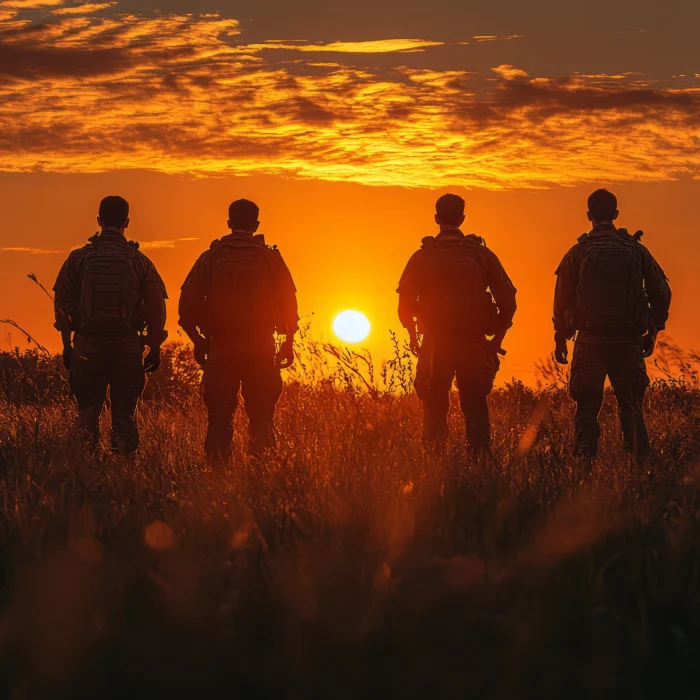
There was a time in my life when almost every moment was controlled by someone else. During military service, even our “vryetyd bestuur” was tightly managed. The few hours we had to choose our own activities were spent washing clothes, writing letters, listening to music, or standing in long queues for a short phone call. Control only lifted when we returned home, removed our uniforms, and enjoyed a brief break from the system. Those two years were challenging, and even after leaving the army, it took time to shed habits shaped by constant command and control.
The military requires strict structure to function as a unified strong unit. In the uncertainty of battle, disciplined, coordinated action is essential. Lives depend on clear orders being followed. Without strong control, a unit risks collapsing into chaos. The average age of most conscripts was 20 years old, I am sure no commander would sleep easily without firm systems in place.
My 24 months in uniform taught me many lessons; discipline, resilience, tenacity, physical endurance, and the value of relationships. Forty years later, I still keep in touch with some of those I served with whom I served. Yet the most challenging aspect of that time and environment was the relentless focus on commands, some of which did not even make sense. Even today I am cautious when leaders in non-military settings default to issuing orders or exercising unnecessary control. Living each day sandwiched between two commands like “staan op” and “ligte uit” became exhausting very quickly.
Hierarchical control is not limited to the military. It remains the dominant leadership model across the world. Many people naturally seek structure and certainty. This I see often when individuals complete the BANK values assessment, where Blueprint (order, rules, control) is frequently the top value selected. Hierarchy offers clarity, accountability, and operational efficiency, especially in large organisations. On the other side of the coin it can contribute to high levels of employee disengagement, stress, and mental fatigue.
In politics, we increasingly see leaders turning to popularism with a hint of autocracy insisting on centralised power. These leaders also use fear-based tactics, and tend to weaken democratic norms. Such approaches may deliver short-term strength but create long-term instability. By contrast distributed leadership empowers others and builds systems that outlast any single leader. Inclusive leaders create space for emerging voices and encourage broader ownership.
When all decisions depend on one person’s approval, organisations slow down, morale drops, and stagnation follows. A militaristic approach might work in warfare, but it becomes unsustainable in modern workplaces.
Leadership styles that worked in the past will not always work in the future. Great leaders invite feedback, develop new strategies, and grow new leaders. While distributed or hybrid models come with challenges like role ambiguity, slower consensus, scaling complexity, they do nonetheless create higher engagement and stronger commitment.
Today’s workplace spans five generations, each with different expectations. Managing this diversity requires more than command and control; it demands a balanced, hybrid approach, one that maintains structure where necessary but embraces flexibility, collaboration, and shared leadership.
Collaboration is needed far more than command and control leadership models in today’s rapidly changing world.
Is your leadership style built for today’s workplace?
Paul Tanton
Leadership Entrepreneur and Coach